

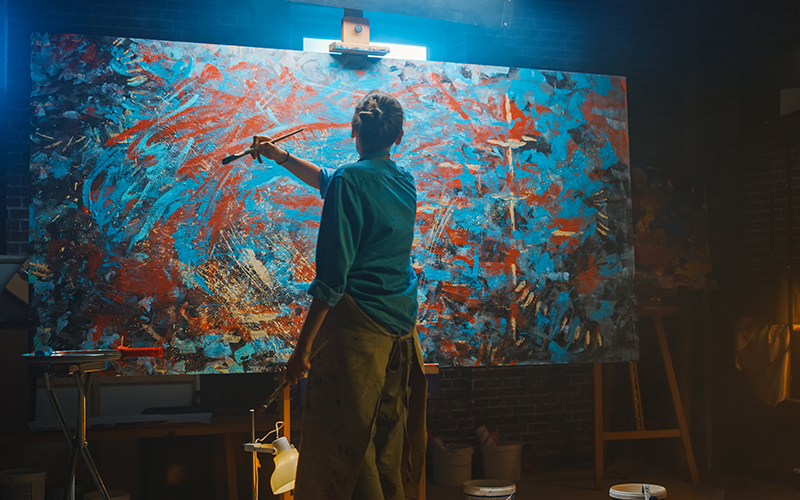
Artificial Intelligence is revolutionizing many aspects of our lives, but in the realm of art, its rise raises more concerns than opportunities. Painting, filmmaking, writing, and music are not just technical exercises—they are expressions of human emotion, culture, and imagination. AI, no matter how advanced, cannot replicate the depth, nuance, and lived experience that underpins genuine creativity.
The Threat to Authentic Creativity
AI-generated art relies on patterns, algorithms, and pre-existing works. While it can mimic styles or generate visually appealing images, it lacks consciousness, intention, and the emotional spark that makes art meaningful. A poem written by a machine may be grammatically perfect, but it cannot bleed, laugh, or suffer. A painting produced by AI can be aesthetically impressive, but it carries none of the personal struggles, insights, or stories that a human artist imbues into their work.
When creators rely on AI tools, the risk is that art becomes formulaic and hollow. Creativity transforms from an intimate, human endeavor into a mechanical output optimized for clicks, likes, or virality. In filmmaking, AI-assisted scripts or automated editing may save time, but they also threaten to strip stories of their cultural authenticity and moral complexity.
Jobs, Skills, and the Human Touch
Beyond questions of authenticity, AI in the arts poses a direct threat to human creators. Writers, illustrators, designers, and filmmakers may find themselves competing with algorithms that can produce content faster, cheaper, and on demand. This threatens not only livelihoods but also the diversity of voices that make art vibrant and reflective of society.
The human touch—the subtle choices, the mistakes, the unique perspective—is what makes art memorable. AI cannot replicate years of lived experience, personal growth, or cultural context. Replacing human input with algorithms risks creating art that is technically flawless but emotionally barren.
Ethical and Cultural Concerns
AI-generated art also raises difficult ethical questions. Whose ideas does the machine borrow when it “creates”? How do we attribute ownership or protect intellectual property? Many AI systems are trained on existing human works without consent, raising concerns about exploitation. Furthermore, biases embedded in AI models may perpetuate stereotypes or cultural misrepresentations, producing art that is not only inauthentic but socially problematic.
Preserving the Human Soul of Art
Art is not just output—it is a process of reflection, struggle, and transformation. It is how societies explore ideas, confront injustice, celebrate beauty, and communicate across generations. To outsource this deeply human process to a machine risks losing what makes art, well, human.
Artists should use tools to aid their craft—but AI should never replace the imagination, intuition, and emotional labor that define authentic creation. Instead of chasing speed and efficiency, creators must preserve patience, imperfection, and personal voice. These are qualities no algorithm can replicate.
Conclusion
The allure of AI in the arts may be tempting, promising efficiency, novelty, and seemingly endless possibilities. But in reality, it threatens authenticity, diversity, and the very soul of creative expression. The future of art should remain firmly in human hands, guided by empathy, lived experience, and imagination. Machines can assist, but they must never replace the human spark that makes art transcend time, culture, and the ordinary.
In resisting the overuse of AI, we are not rejecting technology—we are defending the essence of creativity itself. After all, art is meant to move us, challenge us, and connect us as humans. No machine, however intelligent, can truly do that.
