

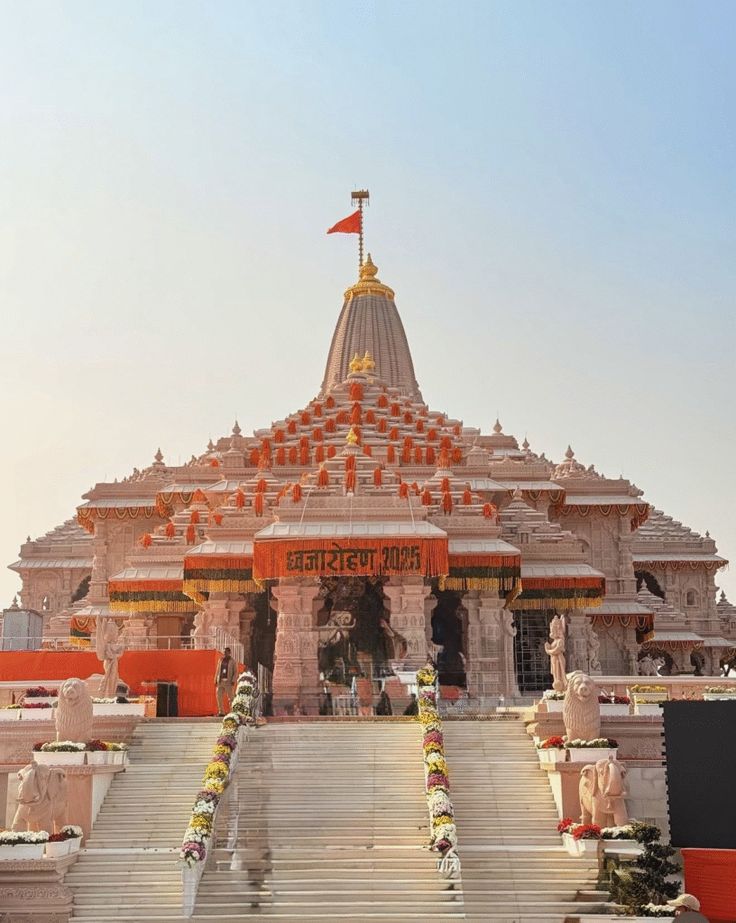
The Ram Mandir in Ayodhya is one of the most significant religious and cultural landmarks in India. Built at Ram Janmabhoomi, believed to be the birthplace of Lord Ram, the temple stands as a symbol of faith, devotion, and centuries-old tradition. For millions of devotees, Ayodhya is not just a city—it is a sacred space deeply connected to Indian spiritual heritage.
Ayodhya has been mentioned in ancient texts such as the Ramayana, where it is described as the capital of King Dasharatha and the birthplace of Lord Ram. Over time, the site became central to religious belief, historical debate, and legal proceedings. After a long judicial process, the Supreme Court of India cleared the way for the construction of the Ram Mandir, marking a historic moment in modern India.
The temple’s architecture follows the Nagara style, reflecting traditional Indian temple design. Built using sandstone and traditional techniques, the structure highlights skilled craftsmanship and timeless aesthetics. The temple complex is designed not only as a place of worship but also as a cultural and spiritual center.
The inauguration of the Ram Mandir has transformed Ayodhya’s landscape. Improved infrastructure, renovated ghats along the Sarayu River, better roads, and new facilities have turned the city into a major spiritual tourism destination. Pilgrims from across India and abroad now visit Ayodhya to experience its sacred atmosphere.
Beyond religion, the Ram Mandir represents continuity—linking ancient belief with contemporary India. It has strengthened Ayodhya’s identity while bringing global attention to its historical importance.
The Ram Mandir is more than a monument. It is a reflection of devotion, heritage, and the enduring power of faith that continues to shape India’s cultural soul.
