

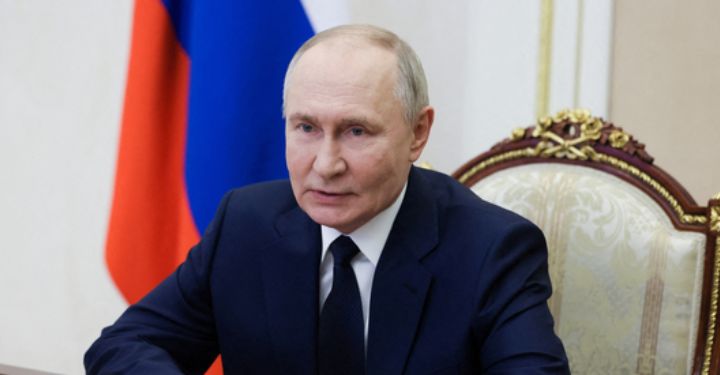
From Russia’s perspective, the U.S. ceasefire proposal is seen as a tactical move to freeze the situation in Ukraine, giving the West time to reinforce its military aid to Ukraine. Russia’s official line is that the U.S. and NATO have been stoking the conflict for years by supporting Ukraine’s Western alignment and facilitating its growing partnership with NATO.
Russian representatives assert that the U.S. proposal for a ceasefire is inherently flawed because it ignores Russia’s perceived security concerns. In the Kremlin’s view, the conflict is not simply about territorial disputes but is also a broader ideological struggle over Russia’s role in the world order. Moscow argues that NATO’s eastward expansion is an existential threat to Russian security and that the U.S. has exacerbated this threat by backing Ukraine’s pro-Western government.
Putin’s representatives continue to argue that the U.S. is not seeking peace but rather trying to achieve a political victory over Russia. By framing the conflict as a proxy war, the Kremlin has been able to galvanize domestic support for the war, portraying Russia as the victim of Western aggression.
U.S. Involvement and the Risk of Escalation
The U.S. has been a central player in the international response to Russia’s invasion of Ukraine, supplying billions of dollars in military aid, including anti-tank and anti-aircraft systems, drones, and advanced artillery. Russia sees this involvement as part of a larger strategy to weaken its military and economic power.
While President Biden and NATO allies insist that they are acting in defense of Ukraine’s sovereignty and territorial integrity, Russia perceives this intervention as an effort to stoke a direct confrontation between the U.S. and Russia. Moscow’s rhetoric continues to warn of the risk of escalation, particularly as the conflict has become more internationalized with increasing arms supplies and diplomatic support for Ukraine.
