

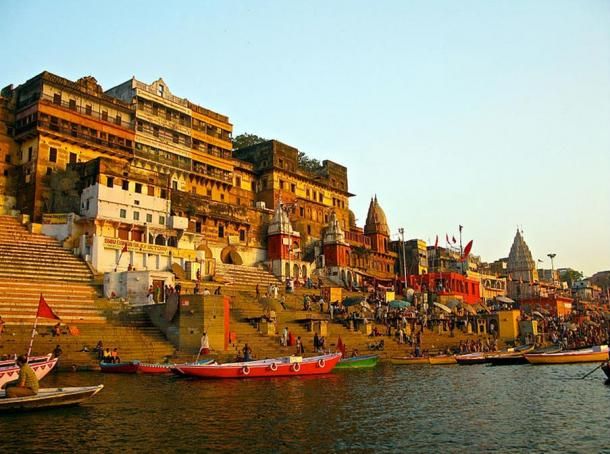
Manikarnika Ghat, located in the ancient city of Varanasi (Kashi), is one of the most powerful and spiritually intense places in India. Situated on the banks of the River Ganga, it is known as the main cremation ghat and holds deep significance in Hindu belief. For travelers, Manikarnika Ghat is not just a place to visit—it is an experience that changes how one looks at life and death.
According to Hindu mythology, it is believed that Lord Shiva whispers the mantra of liberation into the ears of those who die here, granting them moksha, or freedom from the cycle of rebirth. Because of this belief, families from across India bring their loved ones to be cremated at Manikarnika Ghat. The eternal funeral pyres burning day and night symbolize the truth of human existence—that life is temporary.
Despite the presence of death, the atmosphere at Manikarnika Ghat is calm and deeply spiritual rather than fearful. Priests chant mantras, the Ganga flows silently beside the flames, and life continues around the ghat. For many travelers, witnessing these rituals is emotional and eye-opening. It reminds visitors of the simplicity of life and the equality of all humans in death.
Near the ghat lies Manikarnika Kund, a sacred water tank linked to mythological stories of Lord Vishnu and Goddess Parvati. Pilgrims believe the kund adds spiritual purity to the rituals performed here.
Manikarnika Ghat is not a typical tourist attraction—it demands respect, silence, and reflection. Photography is often discouraged, and visitors are expected to observe from a distance. Yet, for those seeking a deeper understanding of Indian spirituality and philosophy, this ghat offers one of the most profound travel experiences in the world.
A visit to Manikarnika Ghat is not about sightseeing; it is about understanding life by witnessing death.
Sources:
