

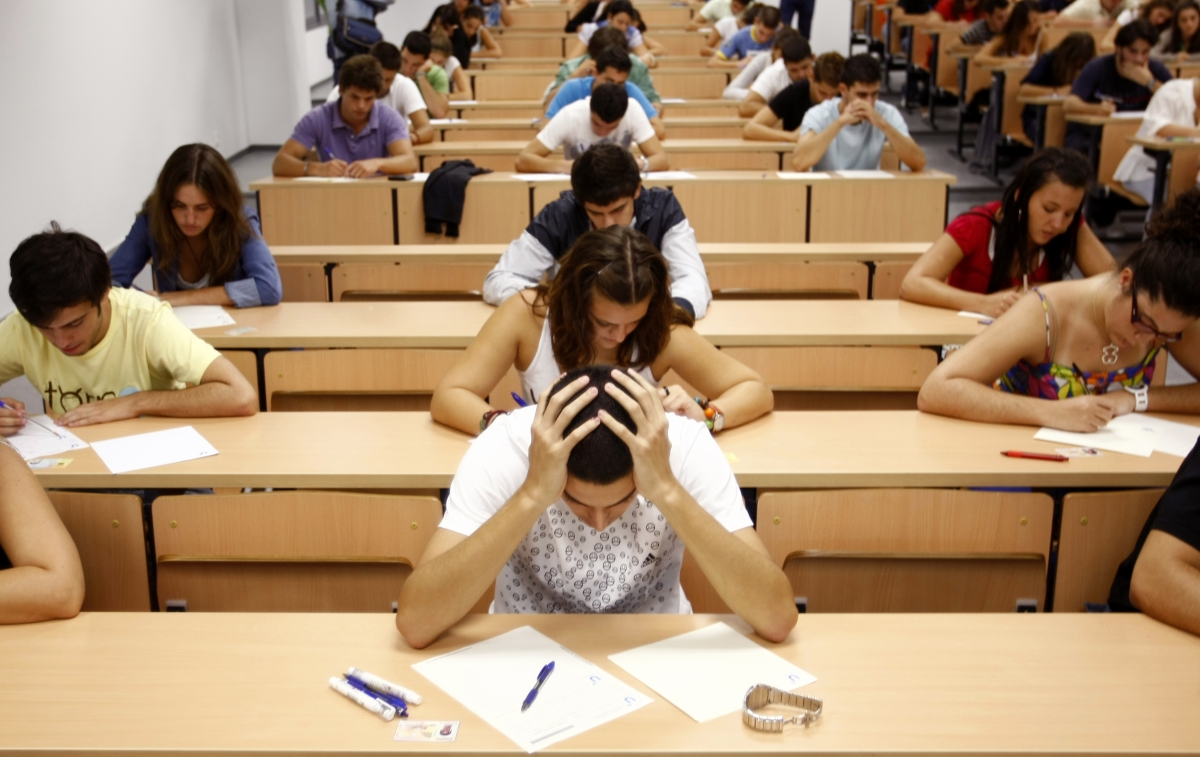
In India, competitive exams are not merely assessments of knowledge. They are rites of passage, social filters, and—often—quiet sources of collective trauma. From school-level entrance tests to national examinations that determine careers, mobility, and dignity, exams have come to occupy an outsized role in the Indian imagination.
They promise meritocracy. What they often deliver is anxiety.
An Exam That Decides a Life
For millions of students, a single exam carries the weight of years of preparation and familial expectation. Failure is not framed as a momentary setback but as a moral shortcoming—insufficient discipline, inadequate sacrifice, personal inadequacy. Success, meanwhile, is celebrated less for intellectual growth and more as survival.
This high-stakes culture leaves little room for exploration, curiosity, or failure as a learning process. Instead, education becomes a narrow tunnel aimed at one outcome, where deviation feels dangerous and delay feels disastrous.
Coaching Culture and the Economy of Fear
The rise of India’s coaching industry has transformed exam preparation into a parallel education system—one driven by rankings, mock tests, and constant comparison. Entire cities have been shaped around this ecosystem, where adolescence is traded for discipline and repetition.
What sustains this industry is not just aspiration, but fear: fear of falling behind, fear of wasting potential, fear of disappointing families who have invested time, money, and hope. In this environment, stress is normalized, burnout is invisible, and emotional distress is quietly internalized.
Mental Health as Collateral Damage
The psychological toll of competitive exams is well-documented yet rarely addressed structurally. Anxiety, depression, and feelings of worthlessness are treated as individual weaknesses rather than symptoms of a system designed to exclude more people than it includes.
Mental health conversations often emerge only after tragedy, framed as isolated incidents rather than predictable outcomes of relentless pressure. The system remains intact; the student is blamed.
Meritocracy or Managed Scarcity?
India’s competitive exam culture thrives on scarcity—limited seats, limited opportunities, and an overwhelming number of aspirants. While exams are defended as neutral arbiters of merit, they often privilege access: better schools, better coaching, better environments to study.
In this context, “merit” becomes less about ability and more about endurance—who can withstand the pressure longest, who can afford to prepare repeatedly, who can delay life while waiting for a rank.
What We Don’t Measure
What competitive exams fail to measure is just as important as what they test. Creativity, emotional intelligence, ethical reasoning, and adaptability are sidelined in favor of speed and memorization. Students learn early that curiosity is risky and deviation is costly.
The result is a generation trained to clear tests but uncertain about purpose, fulfillment, or resilience beyond the syllabus.
Rethinking Success, Not Just Exams
The problem is not evaluation itself, but the monopolization of success by a single metric. As long as exams remain the primary gateway to dignity and stability, the pressure surrounding them will continue to intensify.
A healthier system would diversify pathways, normalize non-linear careers, and treat education as growth rather than filtration. Until then, competitive exams will continue to function less as tools of opportunity and more as instruments of quiet suffering.
Conclusion
India’s obsession with competitive exams is not simply an educational issue—it is a cultural one. It reflects how we define worth, success, and failure. Until we confront the emotional cost of this obsession, the trauma will remain normalized, inherited, and invisible—passed from one generation of aspirants to the next.
