

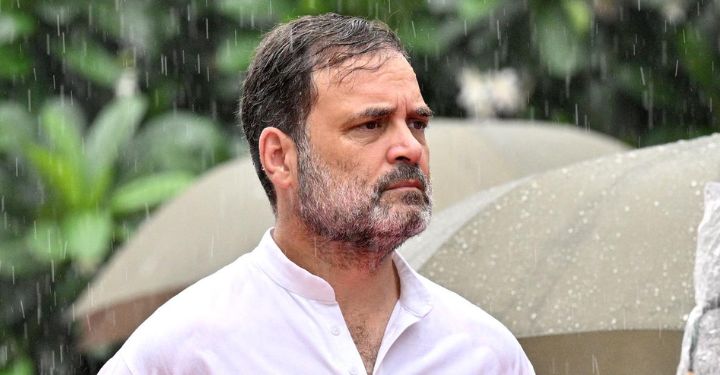
In a move that combines electoral activism with constitutional advocacy, Rahul Gandhi will flag off the ‘Vote Adhikar Yatra’ on August 17 from Sasaram, Bihar. The 14-day campaign will culminate in a massive rally at Gandhi Maidan, Patna, on September 1, covering key political territories and districts across the state.
Described by Congress as a “march for democratic reclamation,” the Yatra seeks to raise awareness about alleged mass voter disenfranchisement due to the Election Commission’s Special Summary Revision (SSR). It’s estimated that over 65 lakh names were removed from the rolls—many of whom belonged to Dalit, Muslim, and economically weaker communities.
“This is no ordinary campaign,” Rahul Gandhi told reporters. “We are walking for the right to vote—for dignity, for justice, and for the soul of Indian democracy.”
Why Bihar, Why Now?
The selection of Bihar as the Yatra’s battleground is deeply symbolic. As the cradle of Indian democracy and grassroots politics, Bihar has historically been a site of political awakening—from JP’s 1974 movement to the Mandal-era shifts in the 1990s.
Rahul Gandhi is tapping into that legacy, trying to galvanize Bihar’s vast and diverse electorate by framing the right to vote as a fundamental social issue, not just a technical or bureaucratic concern.
The Congress believes this approach can reconnect with rural voters disillusioned by “top-down governance” and rising inequality.
A Journey Through the Political Landscape
The Yatra will span over 20 districts, strategically targeting areas with mixed demographic profiles and historical significance—places like Bhagalpur, Kishanganj, Katihar, Muzaffarpur, Gaya, and Darbhanga. It will also pass through tribal belts and minority-dominated areas.
Each stop will feature street-level engagement, including padyatras, community meetings, listening sessions, and public rallies. Senior Congress leaders and local INDIA bloc allies will join different legs, creating a coalition-wide presence on the ground.
Key Congress MLAs from constituencies like Aurangabad, Katihar, and Munger will play host and mobilize regional supporters, hoping to use the Yatra to both consolidate and expand voter bases.
An Emotional, Moral, and Political Undertaking
While the campaign has been designed with clear electoral objectives, the messaging is emotional and moral in tone. Gandhi’s speeches are expected to emphasize constitutional values, fairness in governance, and the erosion of democratic safeguards.
He will frequently reference Dr. B.R. Ambedkar, Jayaprakash Narayan, and Jawaharlal Nehru, invoking a lineage of social reformers to underline the Yatra’s ideological framework.
Climax in Patna: A Statement of Unity
The finale at Gandhi Maidan is not just about show of strength—it’s about unity. It’s expected to feature a common stage for Congress, RJD, Left leaders, and possibly representatives from civil society and voter rights groups.
By making this concluding event inclusive, the Congress hopes to frame the Yatra not just as Rahul Gandhi’s journey—but as Bihar’s collective cry for democratic restoration.
Conclusion: A Test of Will and Messaging
With the BJP-led NDA dismissing the Yatra as a “gimmick,” and some within the INDIA bloc grappling with coordination challenges, Rahul Gandhi’s “Vote Adhikar Yatra” will test not just his personal political will, but also the opposition’s ability to offer a coherent, emotionally resonant counter-narrative in a high-stakes election.
If successful, this campaign could emerge as a template for electoral protest and grassroots revivalism, both in Bihar and beyond.
